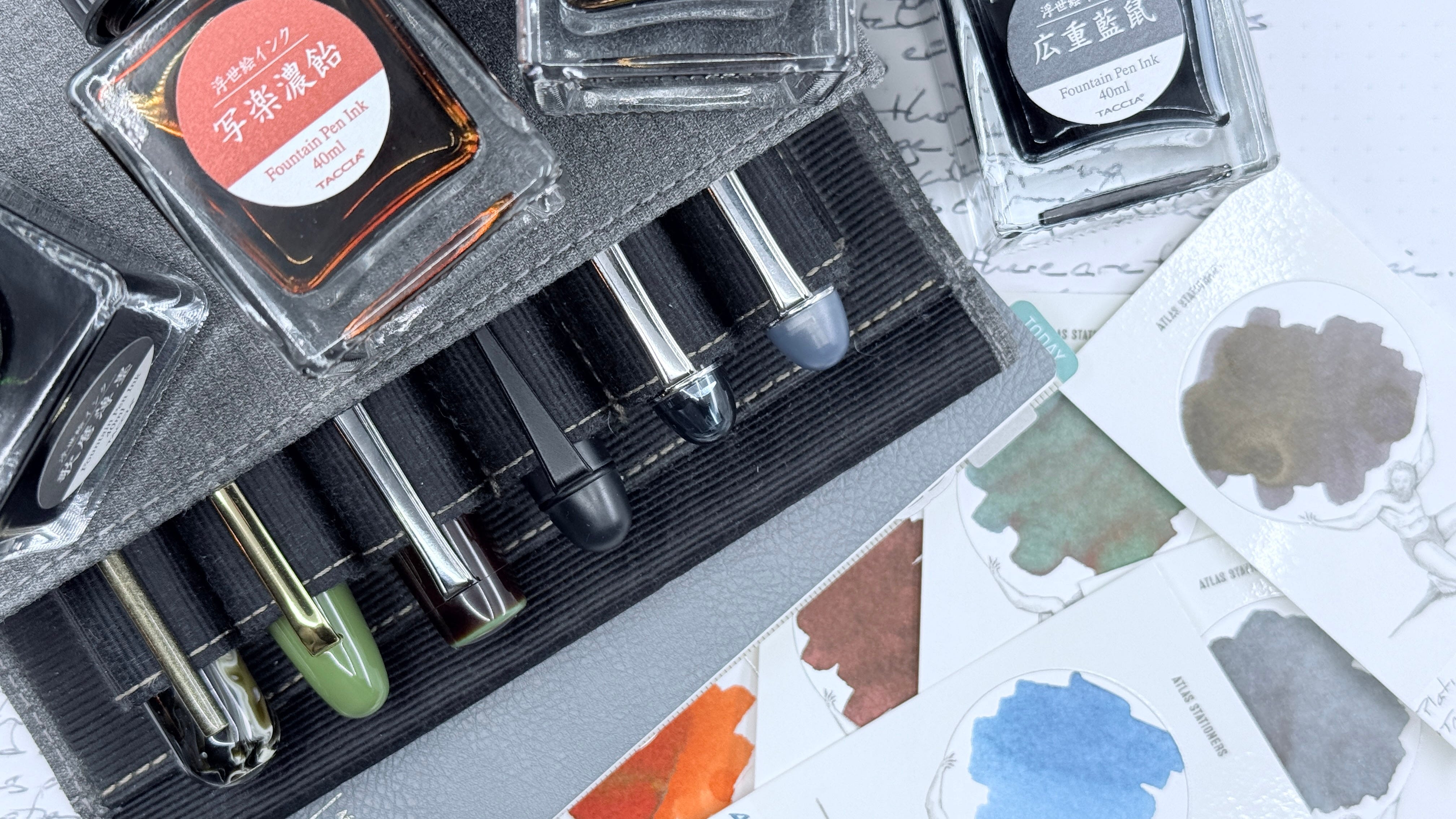
Historically anchoring the week’s palette
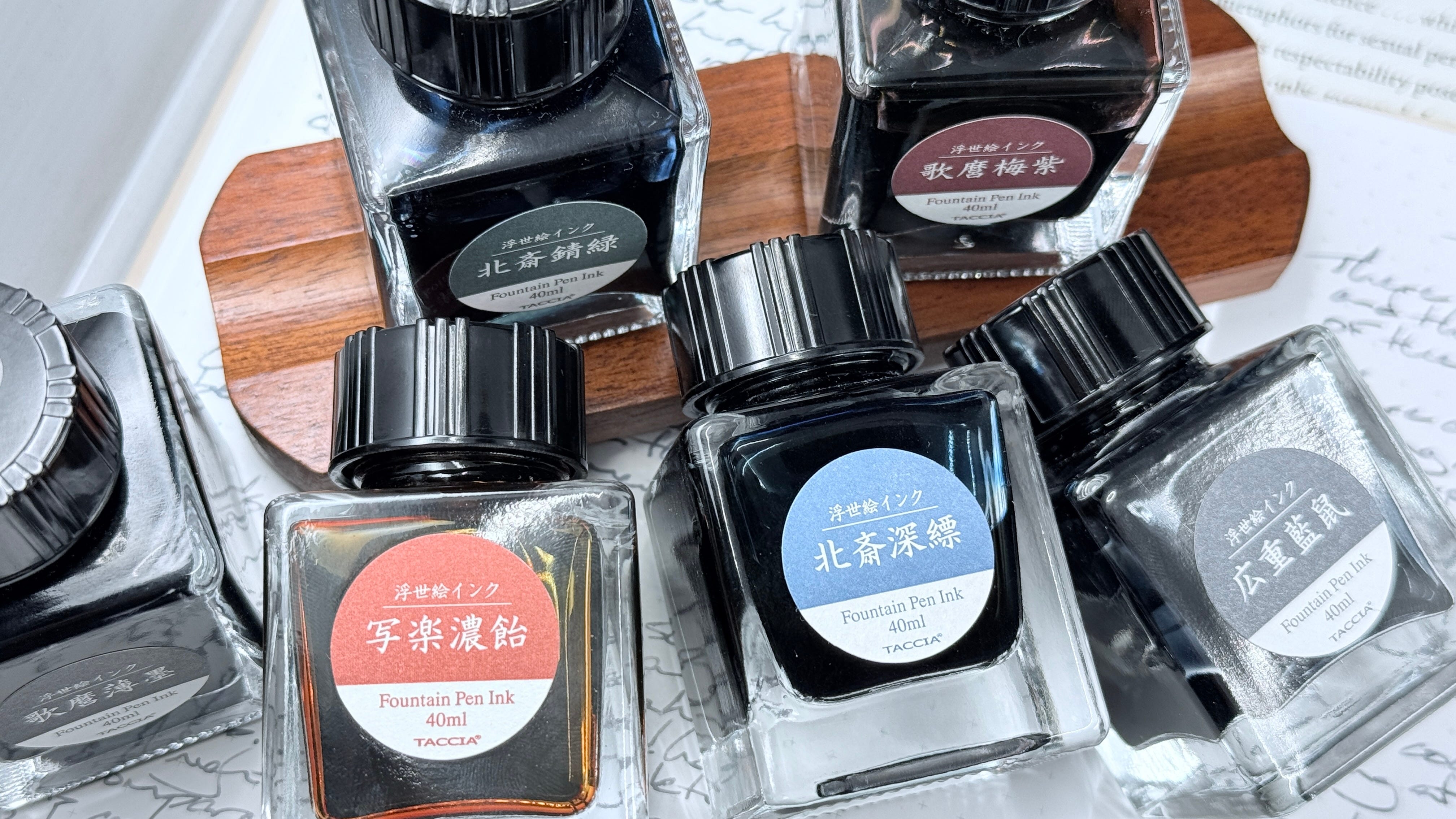
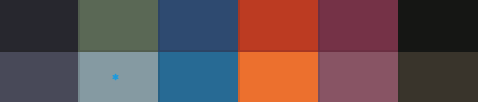
A new year calls for a fresh desk of inked pens. My most recent ink acquisition, Taccia’s Ukiyo-e Fukaki-Hanada, brought my collection of Taccia’s excellent Japanese painters series to six bottles; a sextet that makes a workable currently inked in-and-of-itself. The universe sent me a sign and I inked it.
I anticipate a slow week on campus filled with detailed planning, reading notes, and student meetings. Three architect-shaped nibs lend fine line variation to three different paces of detailed record-keeping: the Nahvalur’s EF Cutlass for deliberation, the Nakaya’s M Naginata for moderate scribbling, and the Esterbrook’s B Scribe for rapid fire distraction. Slow weeks can accommodate adventurous nib choices.
Grey/Black
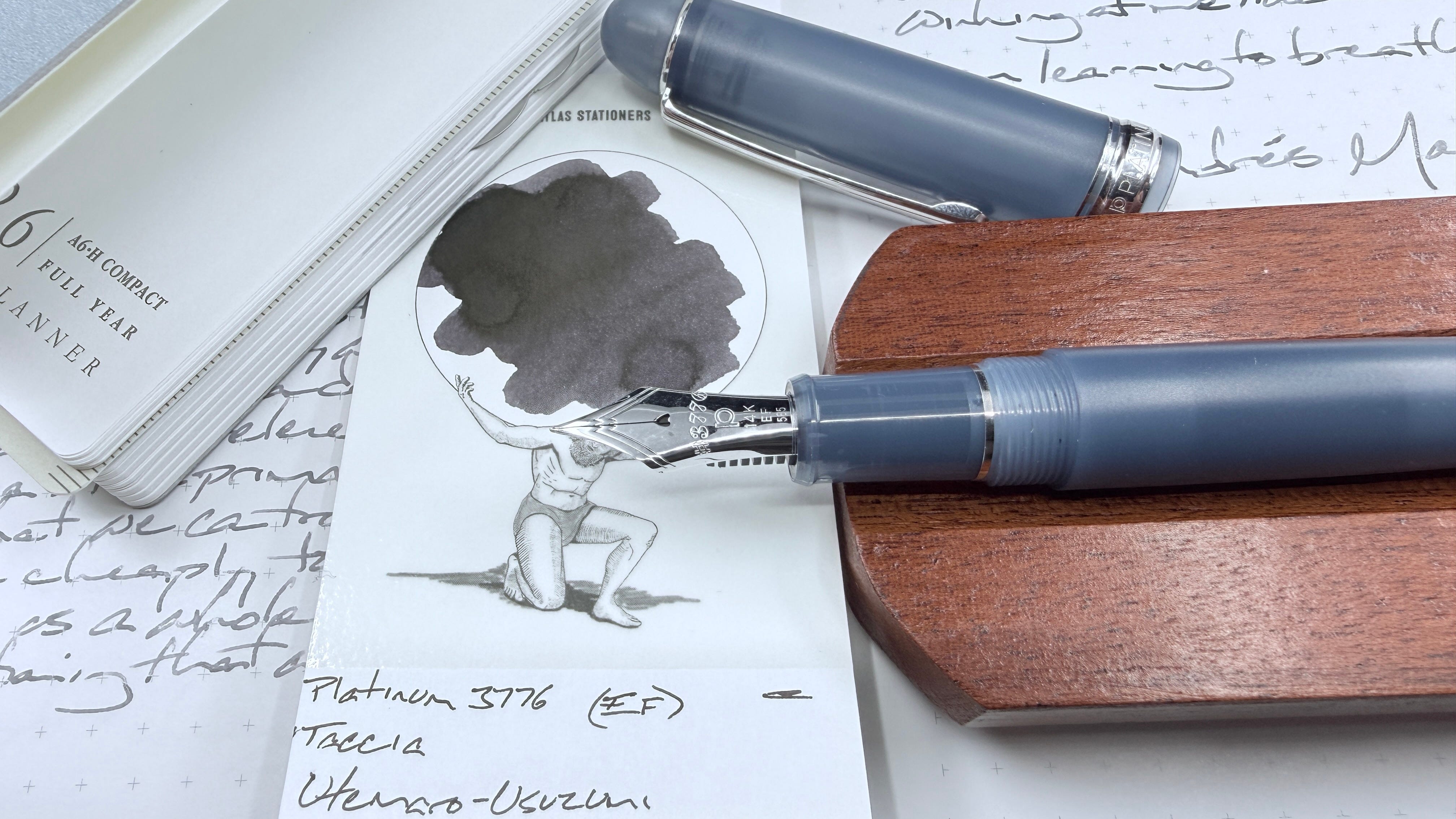
Platinum 3776 Tsuki Kusa (EF). Taccia Ukiyo-e Utemaro-Usuzumi. Usuzumi’s black sheen is a prominent feature of the ink, and one that encourages dry starts. I chose the 3776 for its slip & seal cap which should mitigate the worst of Usuzumi’s dry start side-effect. My all-time favorite EF nib cements a function-forward daily driver. Task management, meeting notes, lesson plan outlines, and reading notes.
Blue/Teal
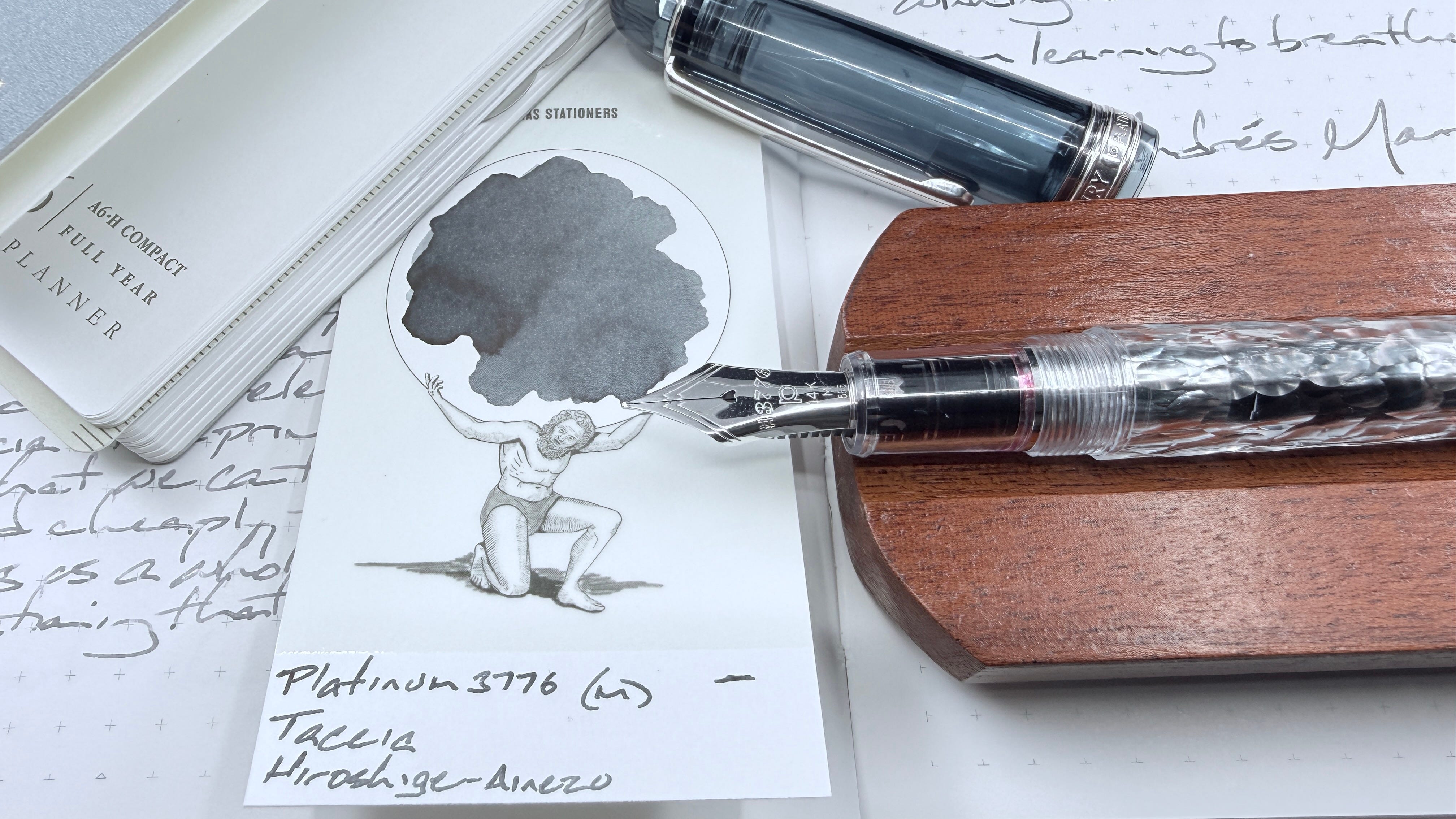
Platinum 3776 Uroko-Gumo (M). Taccia Ukiyo-e Hiroshige-Ainezu. A smooth writing, eye catching pen design that matches Ainezu’s murky grump joyfully well. The M nib is dry enough tease udnertones of blue out of Ainezu, particularly after a long writing session keeps the nib exposed for minutes at a time. The M nib is also forgiving on writing angle, which opens the pairing up to fast moving tasks like brainstorms and rough drafts.
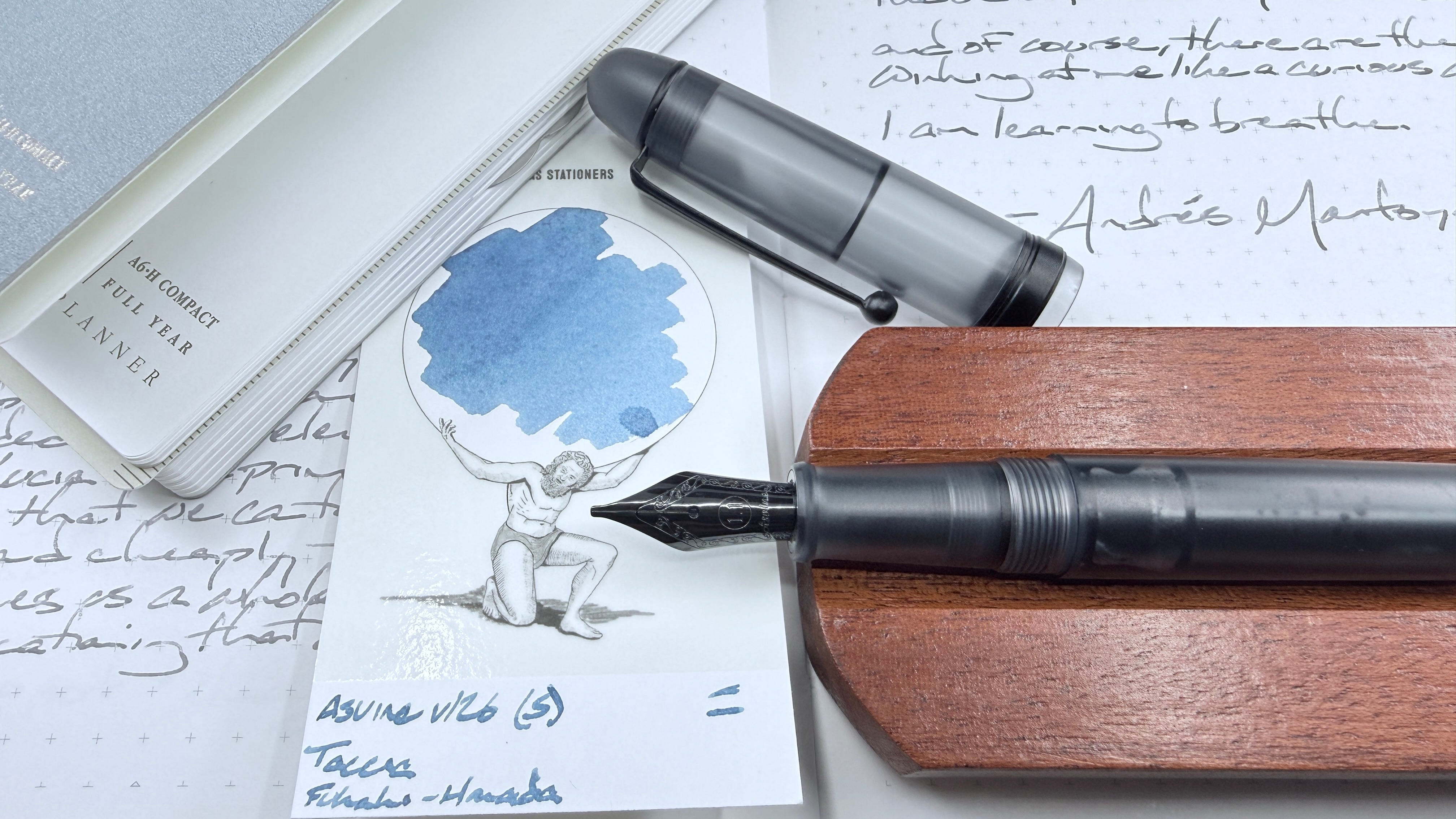
Asvine v126 Matte Black (S). Taccia Ukiyo-e Fukaki-Hanada. The Asvine is impressively sturdy for a pen at the sub-$30 price point. The matted translucent black body and black trim should fly under the proverbial radar during administrative meetings. The stub nib and feed provide gradient shading with the beginning and end of words mid-toned blue and the middles of words an antique turquoise. Escellent for longform reflections, manuscript drafts, and meeting notes.
Earth Tones
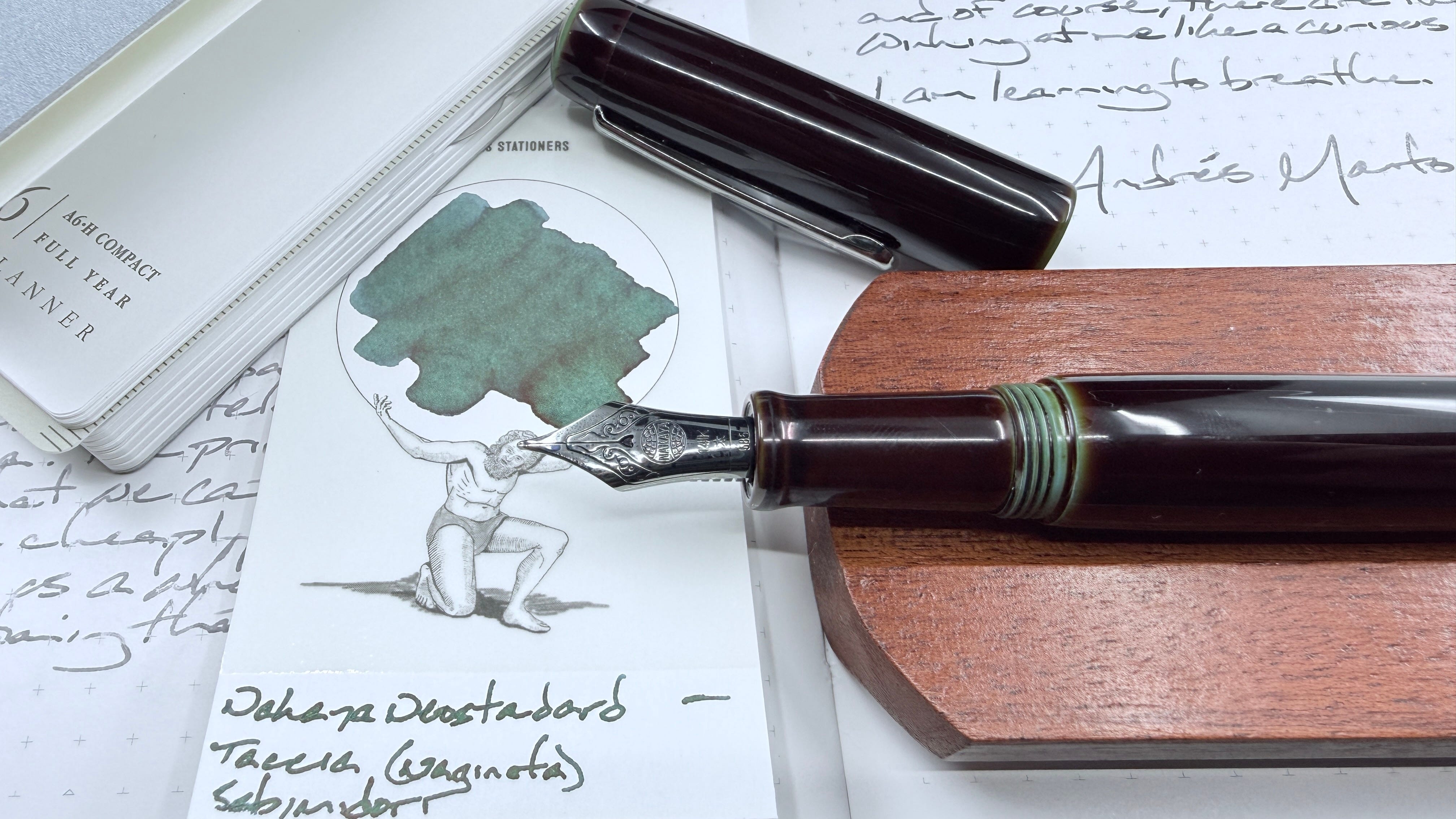
Nakaya Neostandard Heki-tamenuri (M Naginata-togi, by Kyuseido). Taccia Ukiyo-e Sabimidori. A surprisingly wet feed-and/ink combination producing prominent red-orange sheen in the final third of words. The Nakaya’s “naginata” nib grind is forgiving, which lends this writer to thoughtful middling-speed writing sessions wherein I get lost in my own thoughts to the detriment of a disciplined writing angle. And Sabimidori’s fun color-shift (blue to green) lends whimsy to creative brainstorms. Journaling, lesson plan outlines, meeting notes, and creative writing.
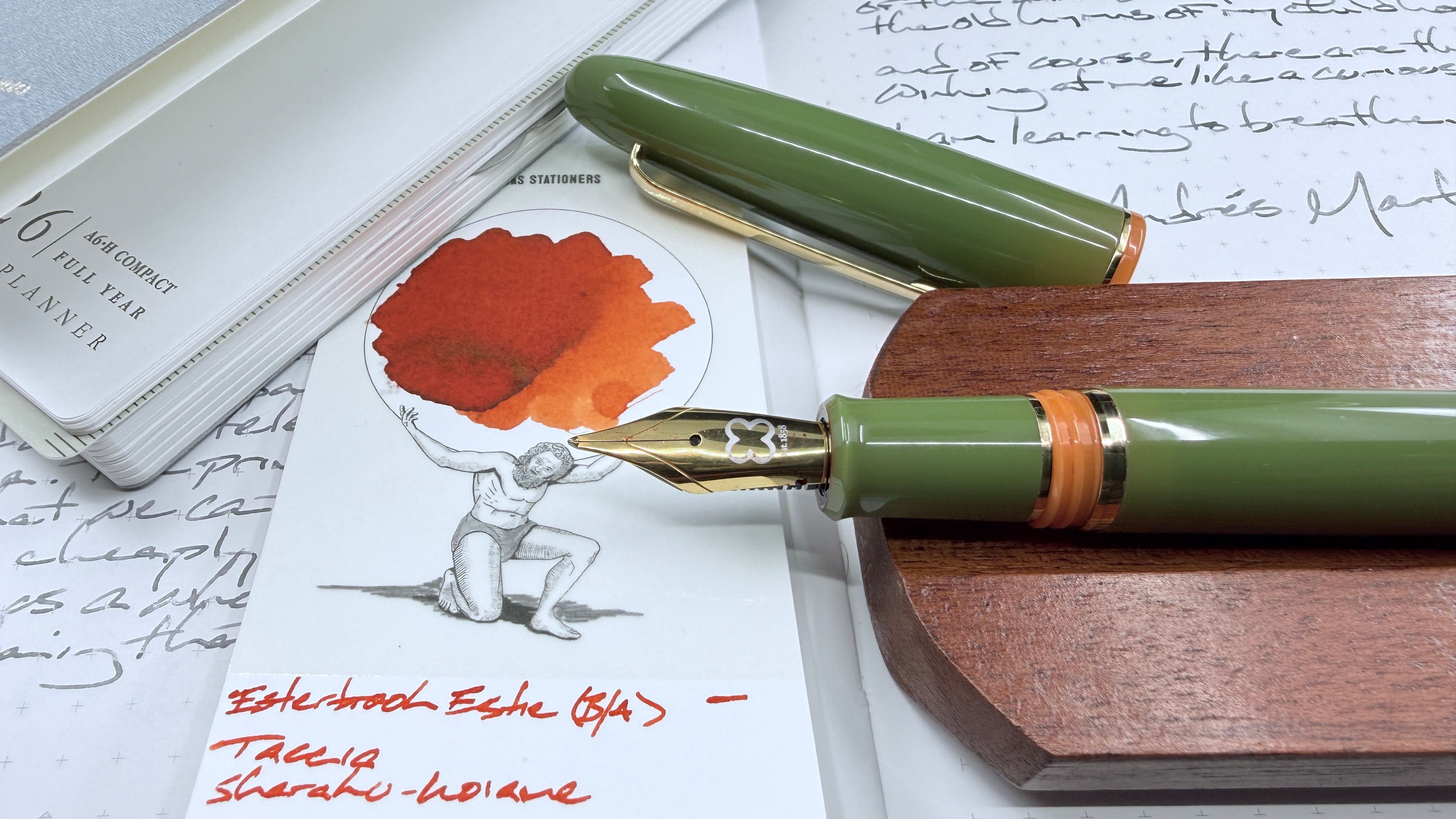
Esterbrook Estie Back to the Land Quirky Leaf (B Scribe, by Josh Lax). Taccia Ukiyo-e Sharaku-Koiame. This particular Scribe grind is quite sharp, which maximizes line variation at a proper writing angle. Koiame’s orange hue leaps off the page for easy reviewing. The Estie’s press-seal cap requires intention to re-cap the pen which lends this particular writer to slow moving recollections and reviews. My go-to accenting writer for margin notes in manuscript drafts, marking student work, and for reviewing notes.
Wild Cards
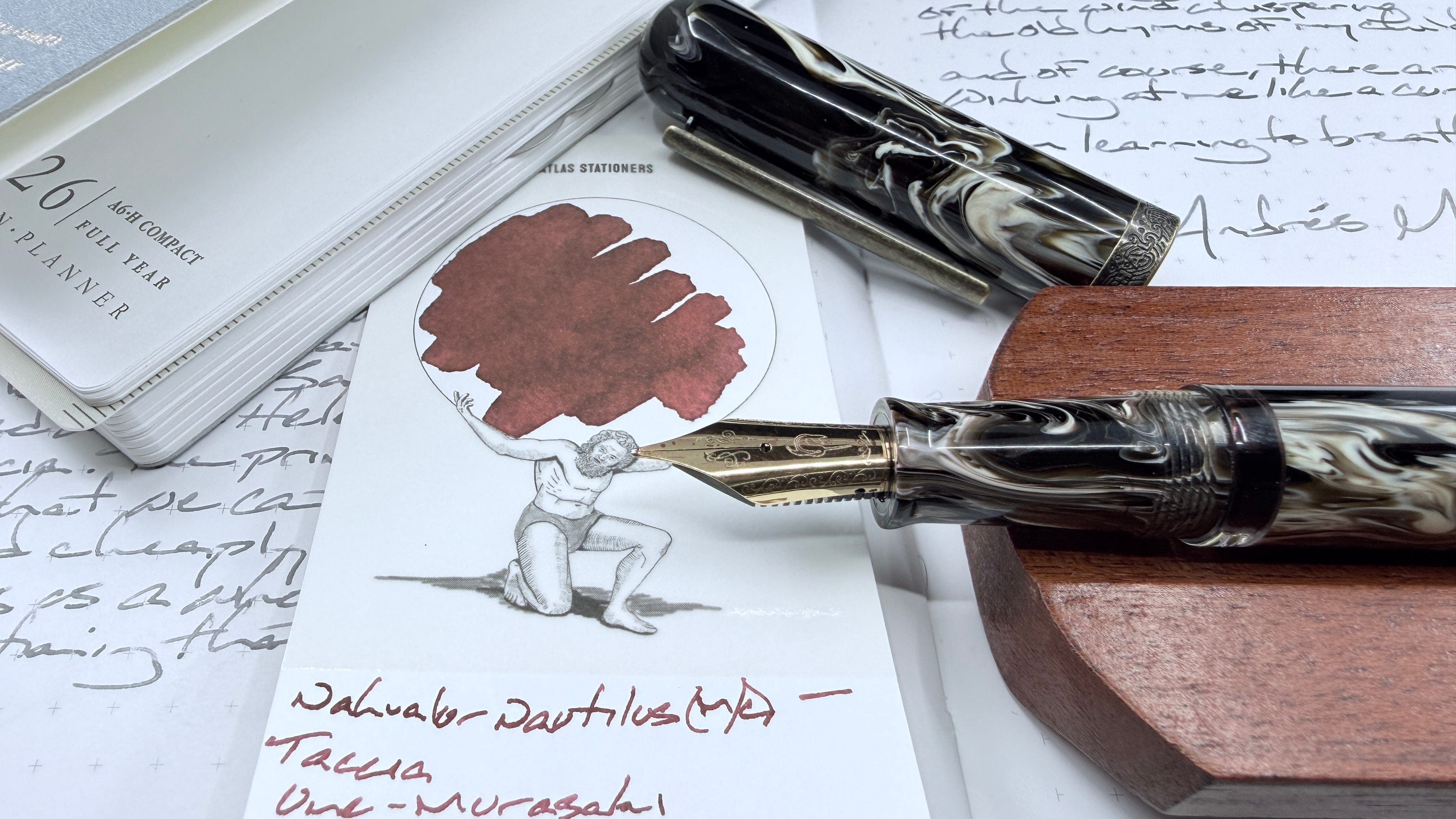
Nahvalur Nautilus Primary Macchiato (Mini-Cutlass, by All in the Nib). Taccia Ukiyo-e Ume-Murasaki. The Nautilus is as goldilocks width for my hand — as comfortable during rapid bursts of scribbling as through longform drafting. Murasaki’s unsaturated red-purple blends just enough alongside Usuzumi to keep me focused while standing out enough within the week’s palette to also serve as a mild accent. The EF-wide Cutlass grind works best for slow-paced tasks like pedagogy analysis and manuscript revision.
All in the family