Substituting one architect for another
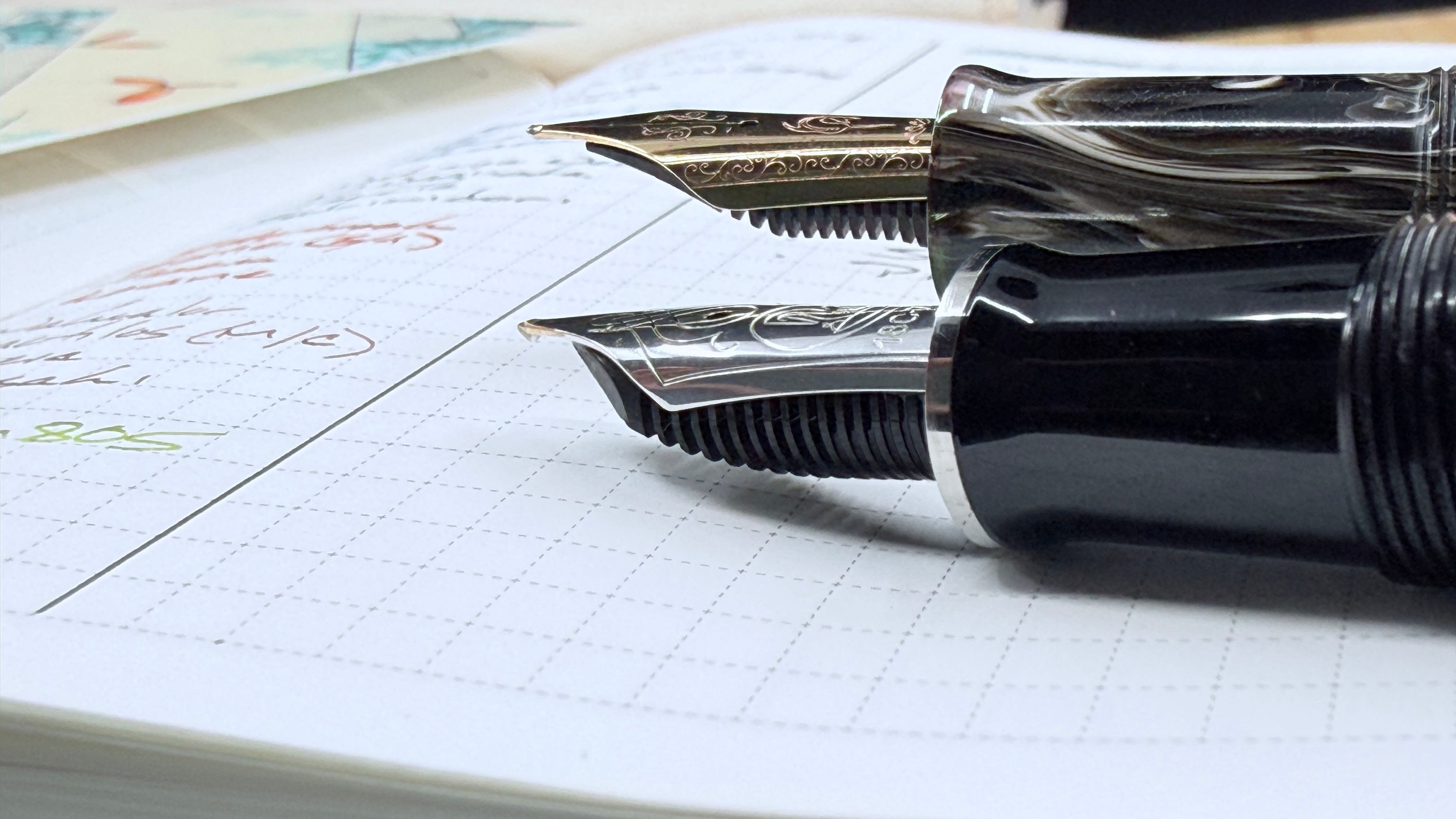
I swapped a mini architect-like grind for a broader architect. The ol’ switcheroo.
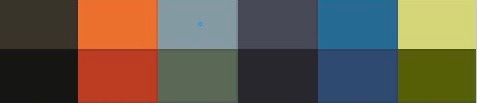
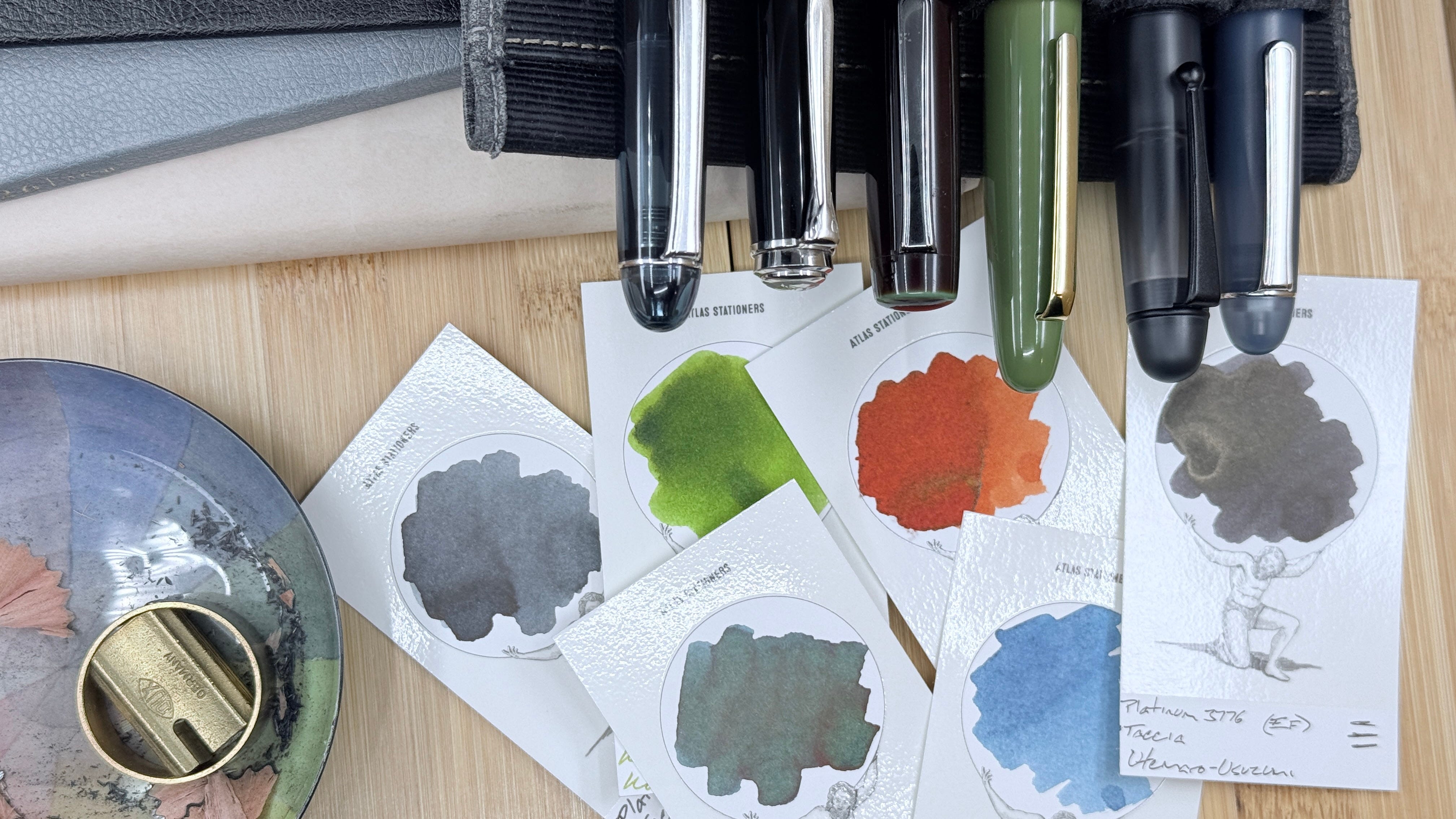
Taccia’s Ukiyo-e series feels designed to spur excitement. Each ink comprises cleverly engineered colors capturing multiple aspects of an historical woodblock print. I’ve collected six inks from the collection which, taken together, cover each color family I like to keep inked in my penvelope: grey/black, blue/teal, earth tones, and one wild card.
I swapped out the Nahvalur and it’s Mini Cutlass grind this week. Ume-Murasaki was simply too dry to write enjoyably in the Nahvalur. No shade to either pen or ink, which are both excellent individually.
I chose a broader, wetter architect nib to replace the Nautilus. The Pelikan m805 is the only pen represented twice in last year’s longest-inked swatches. The moment felt right to re-ink the m805 — not least because the Pelikan was last inked in March 2025.
Grey/Black
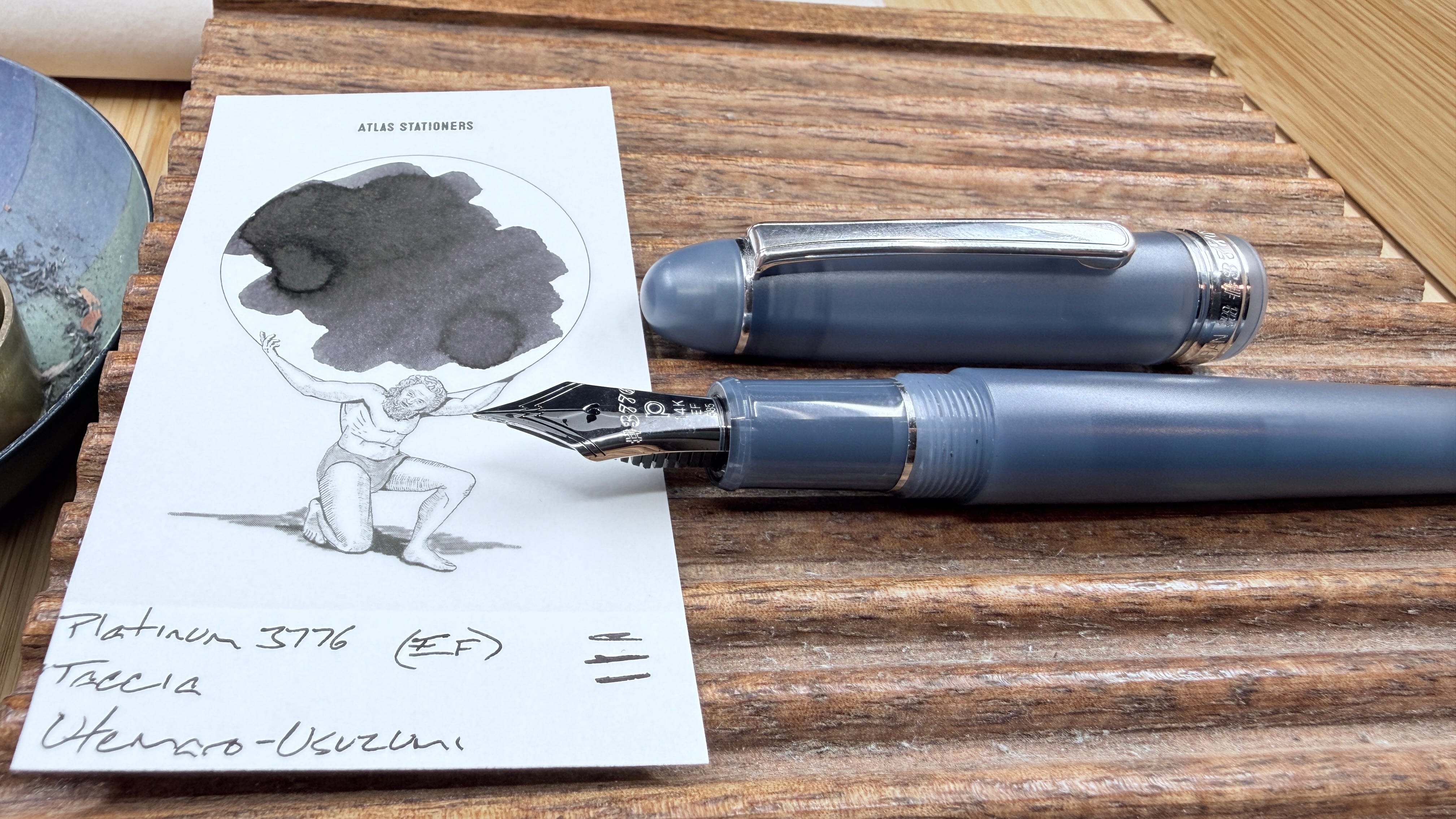
Platinum 3776 Tsuki Kusa (EF). Taccia Ukiyo-e Utemaro-Usuzumi. A combination of periodically flooding the 3776’s feed and Platinum’s sealing cap mechanism keeps the pairing from dry starting between writing sessions. And yet, ten seconds or longer in open-air results in a dry start. Disciplined EF lines make for easily legible detailed notes, even with my scrawny letterforms. Daily driver, task management, lesson plan outlines, and reading notes.
Blue/Teal
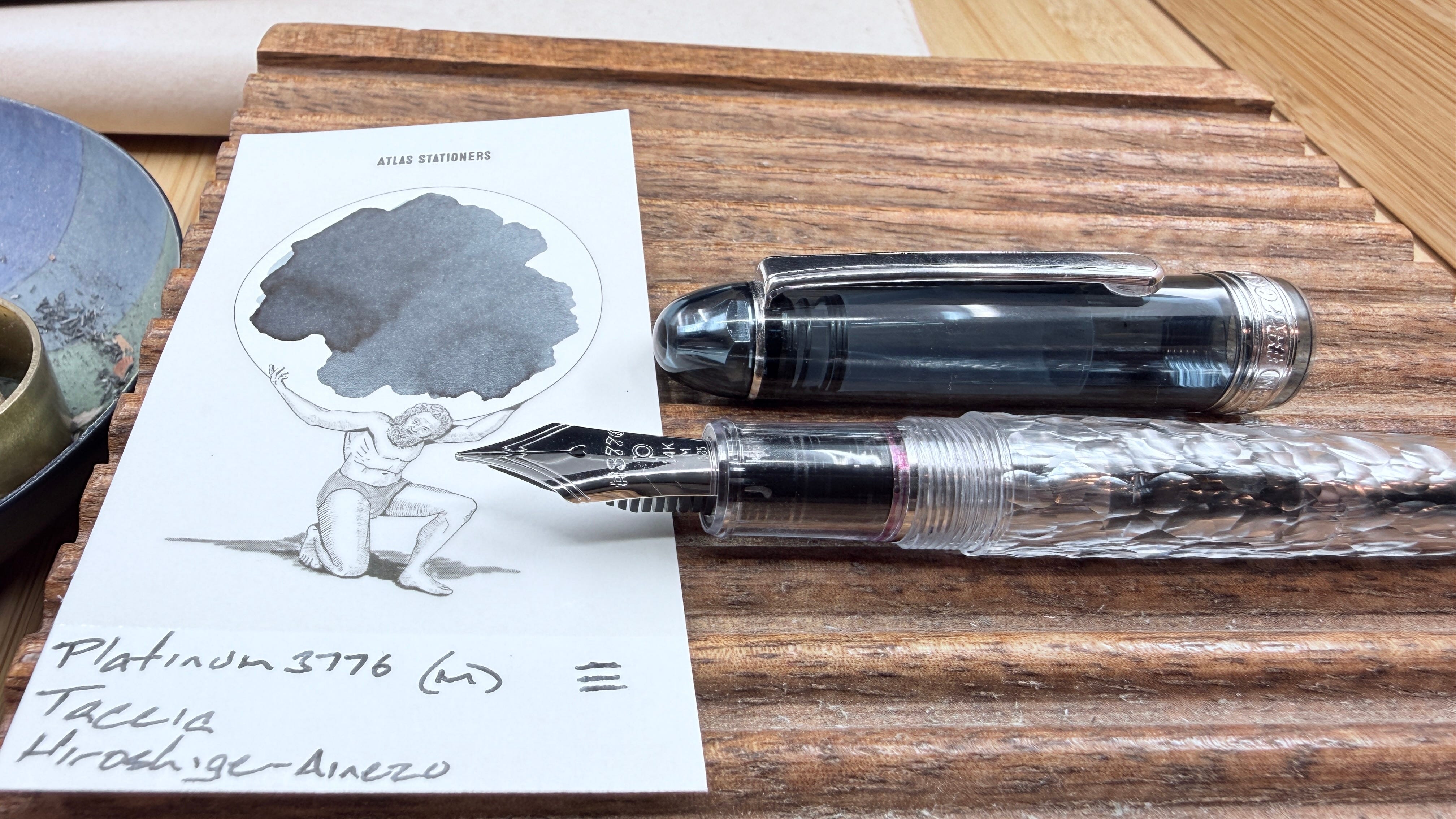
Platinum 3776 Uroko-Gumo (M). Taccia Ukiyo-e Hiroshige-Ainezu. The Platinum M nib and Ainezu are a glass-smooth writing combination. The 3776’s feed is dry enough to coax denim-blue hues out of an often near-black Ainezu. Simply glorious as a pairing. The round nib and smooth writing make for an excellent meeting notes writer. Also: manuscript drafting.
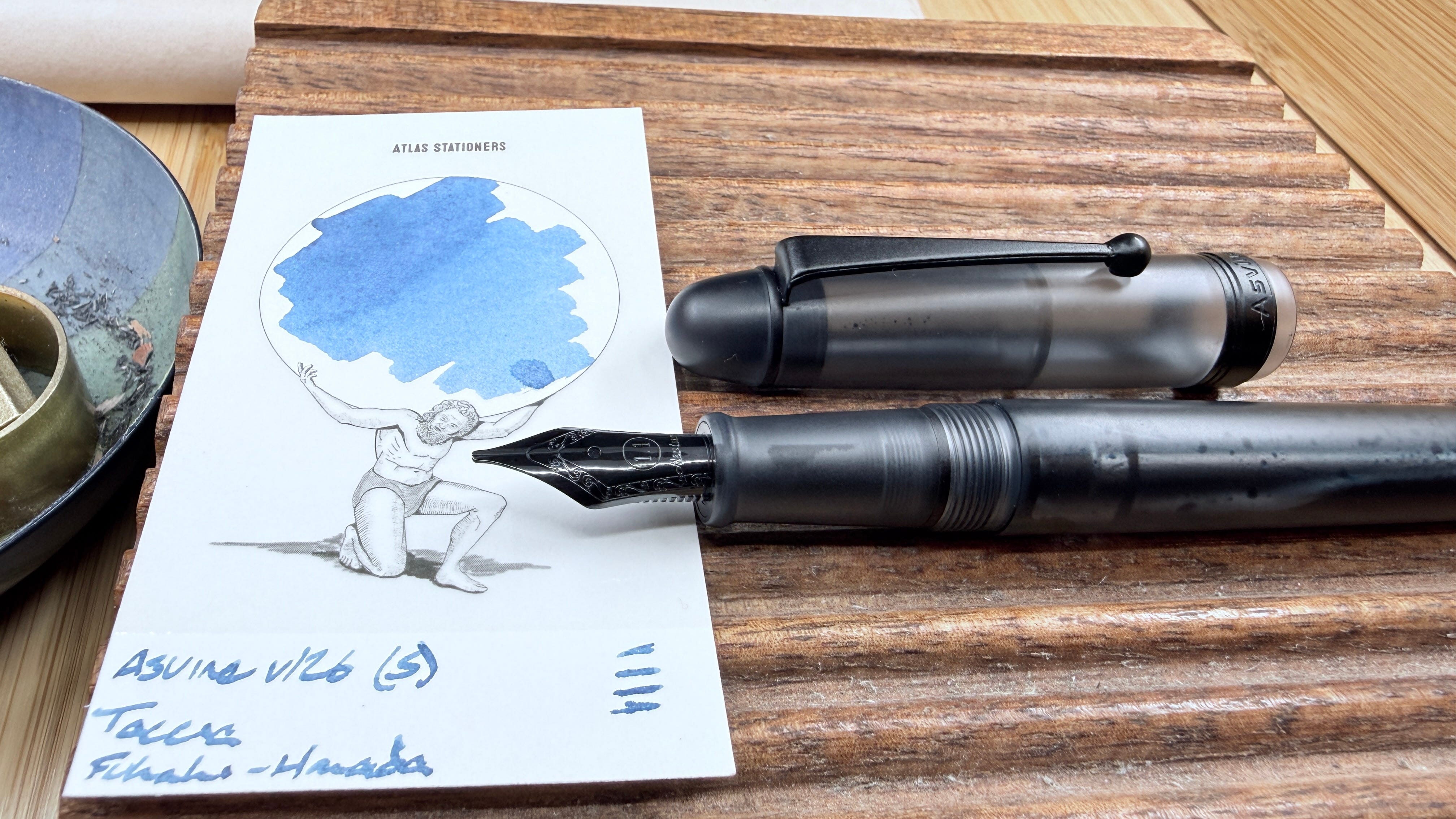
Asvine v126 Matte Black (S). Taccia Ukiyo-e Fukaki-Hanada. Hanada is an ink of moderation: middling flow, dry time, and brightness. An excellent accent color for marking up manuscript drafts and student papers alike. The Asvine is comfortable in short scribblings and longform sessions, opening the pairing up to a diversity of tasks. Journaling, longform reflections, curriculum design, manuscript marking.
Earth Tones
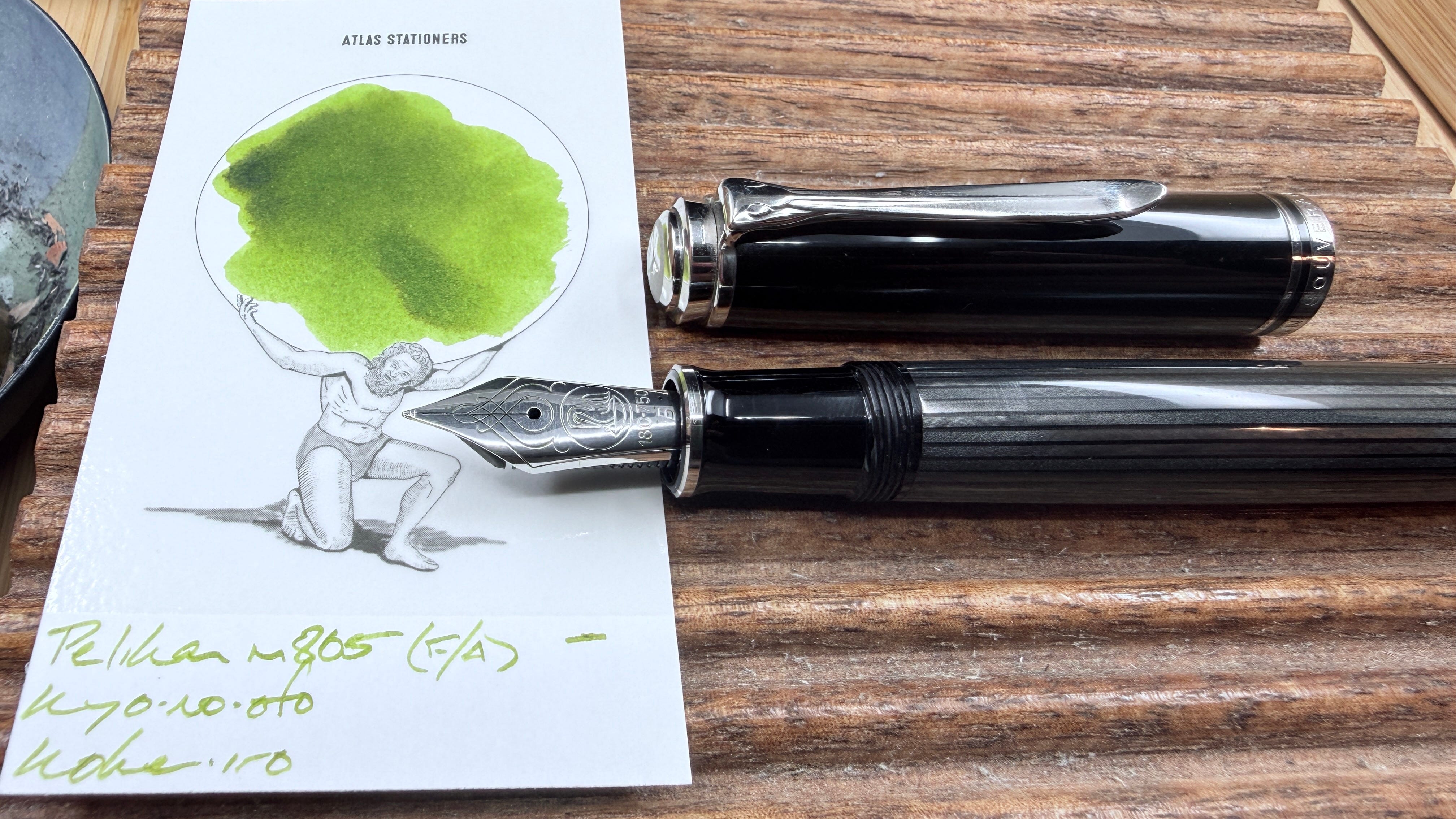
Pelikan m805 Stresemann Anthracite (F Architect, by Custom Nib Studio). Kyo-no-oto Kokeiro. The sole addition to this week’s currently inked. Koke is a powerhouse shader, a feature emphasized by the Pelikan’s generous feed. Koke’s lemongrass green contrasts easily against this week’s somber palette, which lends this pairing to accent and migration annotations. Also: journaling, creative writing, and journaling.
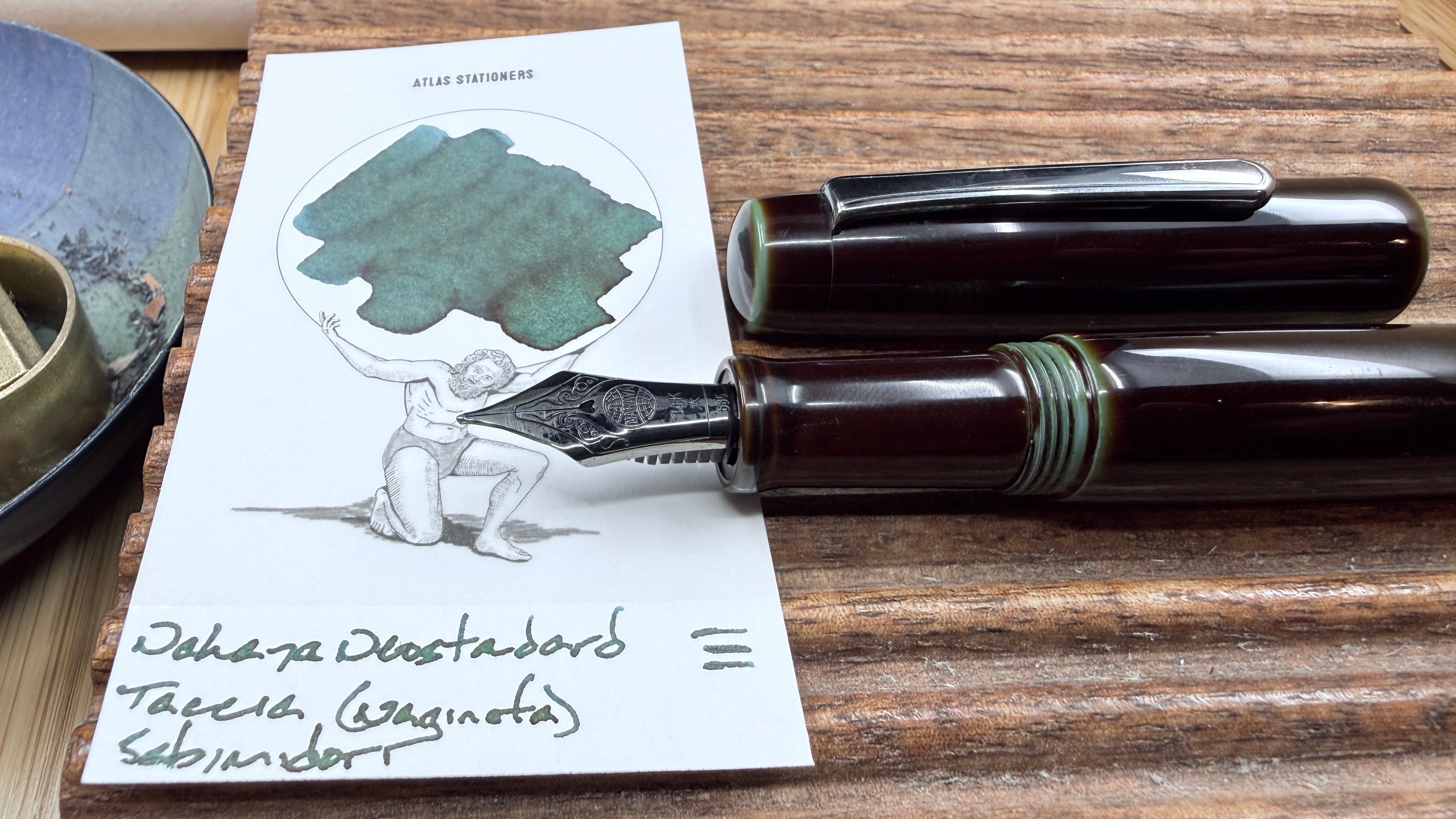
Nakaya Neostandard Heki-tamenuri (M Naginata-togi, by Kyuseido). Taccia Ukiyo-e Sabimidori. Sabimidori color shifts from blue to green as it dries. Writing that would benefit from a degree of whimsy would benefit from placing this pairing to hand. Journaling, creative writing, lesson plan outlines, longform reflections, curriculum design, and meeting notes all come to mind.
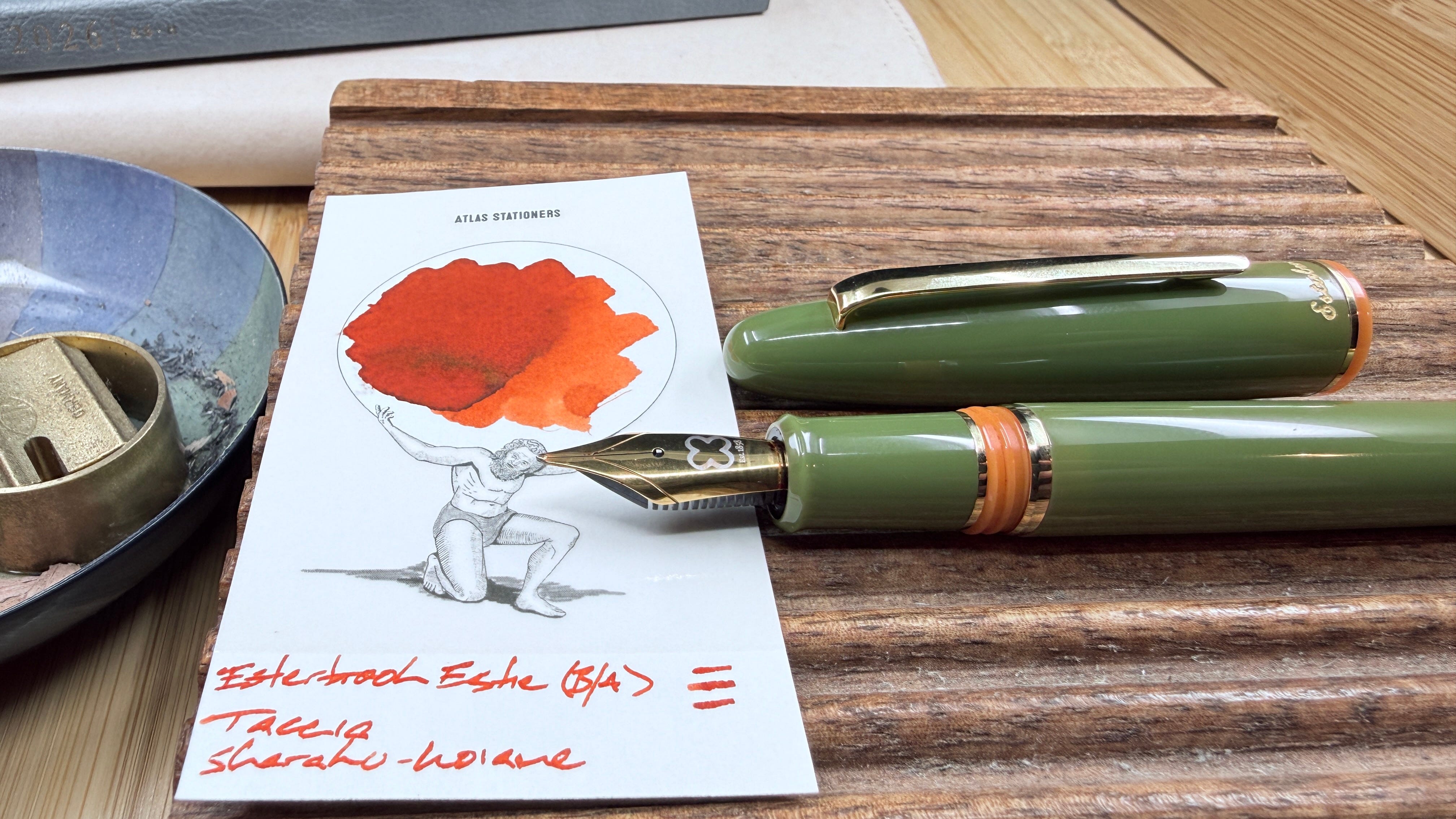
Esterbrook Estie Back to the Land Quirky Leaf (B Scribe, by Josh Lax). Taccia Ukiyo-e Sharaku-Koiame. The combination of the crisp Scribe grind (an excellent nib that shows off line variation) and two-hands-required press-and-seal cap directs this pairing towards slow moving writing: journaling, commonplace notes, notes review.
Wild Cards
Made you look.
All in the family